Limassol Charge on Debit Card [Decoded]

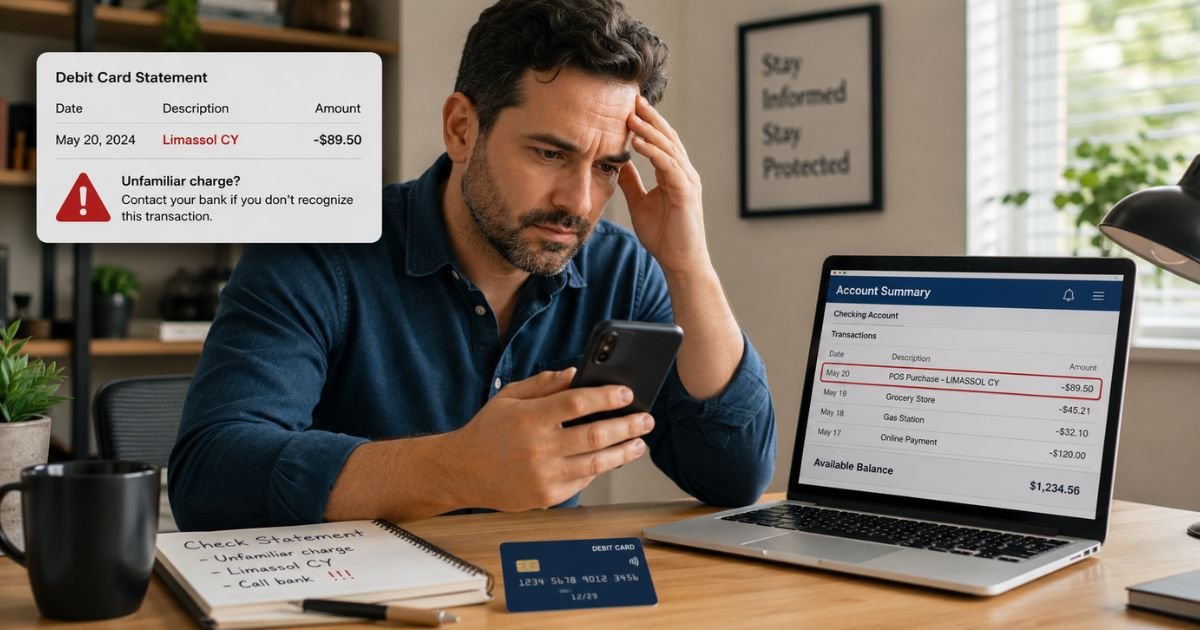
Noticing a Limassol charge on debit card statement can be stressful because the money has already left your account.
Unlike credit cards, debit transactions pull funds directly, which can lead to overdraft fees or cash flow problems if you were not expecting the charge.
This guide explains what the charge likely is, why it appeared, and exactly what to do next, whether it is a forgotten subscription or something unauthorized.
What Is the Limassol Charge on Debit Card?
Limassol is a major city in Cyprus and a popular base for international online businesses. Many e-commerce companies, subscription services, and digital platforms register or route payments through Cyprus.
As a result, their charges often appear on statements with “Limassol,” “Limassol CY,” or “Limassol CYP” added to the descriptor.
You will rarely see just “Limassol.” Instead, it usually looks like:
- fitnessbilling.com Limassol
- EBOOKSBIKE.COM LIMASSOL CY
- DREAMSTUDIOS.CO LIMASSOL
- STRUKIN LIMITED LIMASSOL
- Xsolla Limassol
- Or similar variations with a website name followed by Limassol
These are not one single company. The “Limassol” part simply identifies the merchant’s registered location or payment processor.
The actual service could be fitness coaching, digital downloads, gaming payments, or other online subscriptions.
Some people also see older or less common descriptors like VIP TUNE LIMASSOL from past reports.
Why Did This Charge Appear on My Debit Card?
Several reasons explain why a Limassol charge shows up:
- Recurring subscription renewal. You signed up for a service (often with a free trial or low introductory price) and it auto-renewed at the full rate.
- Free trial conversion. Many services automatically charge after the trial ends unless you cancel.
- One-time digital purchase. You bought ebooks, software, a game item, or online content.
- Family member or authorized user. Someone else on your account or with access to your card made the purchase.
- Authorization hold that posted. Some merchants place a temporary hold that later becomes the final charge.
- Unauthorized use. In some cases, card details were obtained through data breaches, phishing, or testing by fraudsters. Cyprus-based merchants sometimes appear in fraud reports because of the international nature of the transactions.
Because it is a debit card, the funds are gone right away. That makes quick action important to stop any ongoing charges and recover money if the transaction was not authorized.
How to Verify the Limassol Charge
Use this checklist right away:
- Look at the full transaction description in your bank app or online banking for any website name before or after “Limassol.”
- Search your email (including spam and promotions folders) for the website name plus words like “subscription,” “welcome,” or “receipt.”
- Check your phone or computer for recently installed apps or browser extensions related to fitness, ebooks, gaming, or software.
- Review subscription managers on your phone (Apple Subscriptions or Google Play) and any PayPal or digital wallet activity.
- Ask everyone in your household or anyone who has used your card whether they signed up for anything recently.
- Google the exact descriptor plus “cancel” or “contact” to find the merchant’s website and support information.
- Call the customer service number on the back of your debit card and ask for more details about the merchant.
Write down the exact amount, date, and full descriptor before you take further steps.
Is It Legitimate or Fraud?
Legitimate cases are very common. Many people sign up for online fitness programs, language apps, digital libraries, or gaming services and then forget about the recurring charge. The Limassol descriptor simply reflects where the company is based.
Warning signs of potential fraud include:
- No memory of signing up for anything
- Multiple small or recurring charges from different Limassol descriptors
- No confirmation or welcome email from any related service
- Charges that started after you shopped on an unfamiliar website or used public Wi-Fi
- Large amounts that do not match anything you would buy
For debit cards, report anything suspicious immediately. The longer unauthorized charges continue, the more money leaves your account.
How to Cancel a Limassol Charge
Most of these are recurring subscriptions, so canceling the service stops future charges.
- Identify the exact merchant from the descriptor (for example, fitnessbilling.com or dreamstudios.co).
- Visit their website and look for a login, account, or “cancel subscription” page. Many require you to log in with the email you used to sign up.
- Contact their support by email or live chat. Clearly state you want to cancel and request written confirmation.
- If you cannot find the website, search the descriptor online or ask your bank for any additional merchant contact information they have.
- Once canceled, notify your bank so they can flag the merchant and watch for any final attempts to charge.
Some merchants make cancellation difficult on purpose. Keep records of every attempt to cancel, including dates, times, and names of representatives.
Can You Get a Refund?
It depends on the situation.
- Authorized recurring charge: Many merchants offer refunds within a short window (often 14–30 days) if you contact them quickly. Some have “no refund” policies for digital services. Ask for a refund when you cancel.
- Unauthorized charge: Your bank can usually help. Under federal rules for debit cards (Regulation E), you must report the error within 60 days of the statement date. Reporting within two business days limits your loss to $50 in many cases. Banks often issue provisional credit while they investigate.
- Ongoing fraud: If multiple charges appear, your bank may close the card and reissue a new one. You can also request they block future transactions from that merchant.
Success is higher when you act fast and provide clear documentation. Keep copies of all emails and notes from phone calls.
What to Do If the Charge Is Unauthorized
Follow these steps in order:
- Contact your bank or debit card issuer immediately (use the number on the back of the card or in the app). Report the charge as unauthorized and request a dispute.
- Ask the bank to place a stop on any further charges from that merchant and consider freezing or replacing the debit card.
- Submit a written dispute if required by your bank. Do this within 60 days of the statement.
- Monitor your account daily for any new charges.
- If the amount is large or you suspect identity theft, file a report with your local police and the FTC at IdentityTheft.gov.
- Place a fraud alert with one of the credit bureaus (Equifax, Experian, or TransUnion). It is free and lasts one year.
Your bank must investigate and respond within set timeframes. Many customers receive provisional credit during the process.
Prevention Tips
Protect your debit card from surprise Limassol and other international charges:
- Turn on instant transaction alerts for every purchase, no matter how small.
- Review your debit card activity at least once a week.
- Avoid saving card details on websites. Use virtual card numbers or privacy-focused payment tools when available.
- Be extremely careful with free trials. Set calendar reminders to cancel before they end.
- Use strong, unique passwords and enable two-factor authentication on any accounts that store your card.
- Shop only on secure sites (look for https and the padlock icon).
- Limit who has access to your physical debit card or card number.
- Consider keeping a low balance in your checking account and moving money only when needed.
- Watch for phishing emails or texts that ask for card details or direct you to fake websites.
- If you travel or shop internationally often, ask your bank about travel notifications.
Common Merchant Types Associated with Limassol Descriptors
| Type of Service | Examples of Descriptors | Typical Charge Pattern |
|---|---|---|
| Fitness & Wellness | fitnessbilling.com Limassol | Recurring monthly |
| Digital Content / Ebooks | EBOOKSBIKE.COM LIMASSOL CY | One-time or subscription |
| Gaming & In-App | Xsolla Limassol | One-time or recurring |
| Software / Online Tools | Various .com Limassol | Subscription |
| Other Digital Services | DREAMSTUDIOS.CO LIMASSOL, STRUKIN LIMITED | Recurring or one-time |
Debit Card Dispute Timeline
| Action | Recommended Timing | Notes |
|---|---|---|
| Report unauthorized charge | Same day or within 2 business days | Limits liability in most cases |
| Written dispute deadline | Within 60 days of statement | Required for full Regulation E protection |
| Bank investigation | Usually 10–45 days | Provisional credit often issued |
| Final resolution | Up to 90 days in complex cases | Bank must correct errors or explain denial |
FAQs About Limassol Charge on Debit Card
What company is actually charging me with the Limassol descriptor?
There is no single company. “Limassol” indicates the merchant or payment processor is based in or routes transactions through Limassol, Cyprus. Look for the website name in the full descriptor (for example, fitnessbilling.com) and search that name online to find the exact service.
How do I stop recurring Limassol charges on my debit card?
First, identify and cancel directly with the merchant through their website or support. Then notify your bank so they can block future attempts. Canceling with the merchant is the most effective way to prevent ongoing charges.
Can I get my money back from an unauthorized Limassol charge on debit?
Yes, in most cases. Report it to your bank immediately. Under federal rules, timely reporting limits your loss. Banks often provide provisional credit while investigating. Keep detailed records of your dispute.
Is every Limassol charge on a debit card fraudulent?
No. Many are legitimate but forgotten subscriptions for fitness, digital products, or gaming services. However, because the descriptor is unfamiliar, always verify the charge and cancel anything you do not want. Treat any truly unrecognized charges as potential fraud and report them right away.
Conclusion
A Limassol charge on debit card almost always points to an online subscription or purchase from a merchant based in Limassol, Cyprus.
In many cases it is a service you or someone on your account signed up for and then forgot about. When you do not recognize it, act quickly because the money has already left your account.
Start by verifying the exact merchant using the steps above, cancel any recurring service, and contact your bank to dispute the charge if it was not authorized.
Most people resolve these situations successfully when they move fast and keep good records. Stay vigilant with transaction alerts and regular statement reviews so similar surprises do not catch you off guard again.
Disclaimer: This article is for informational purposes only and is not financial, legal, or banking advice. Debit card dispute rights and timelines are governed by federal regulations and your bank’s policies, which can vary. Contact your financial institution directly for guidance specific to your account and situation.