How to Report Unauthorized Debit Card Charges? [2026]

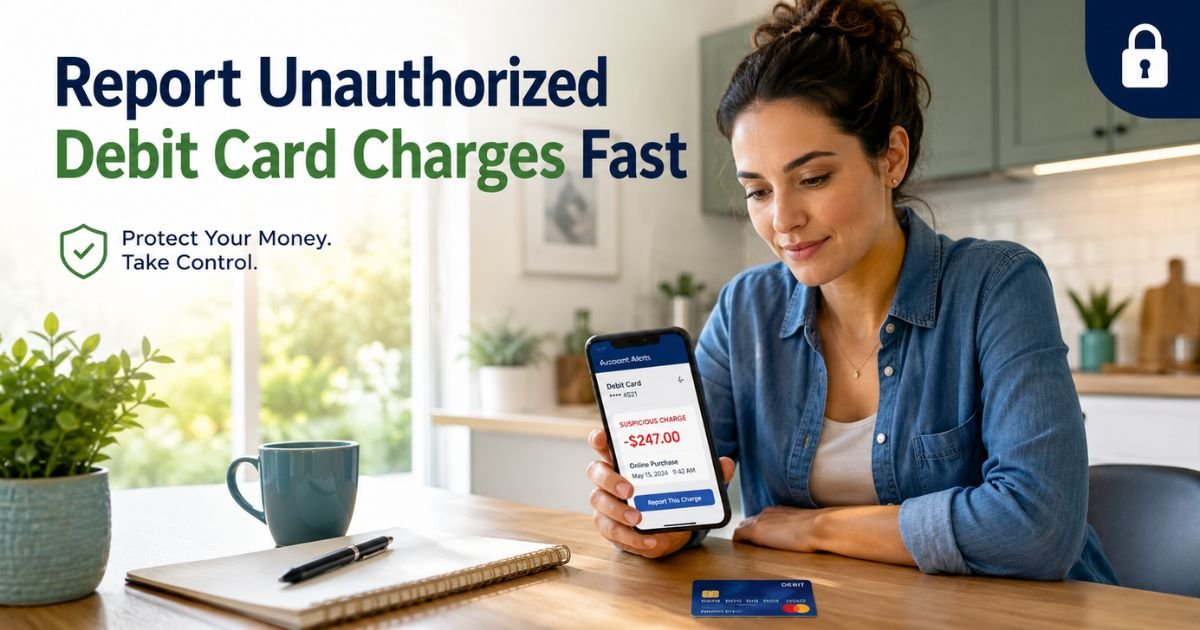
Imagine checking your banking app on a random Tuesday morning and spotting a $189 charge from a store you have never visited. Your stomach drops. You didn’t buy anything there, yet the money is already gone from your checking account.
Sound familiar? Unauthorized debit card charges happen more often than most of us want to admit, and they can leave you feeling violated and stressed about your finances.
The good news is you can take control right away. Knowing how to report unauthorized debit card charges promptly can save you money and get your account back on track fast.
You will learn the exact steps to follow, your legal protections, and smart habits that keep fraud from happening again. You will also see what the bank does behind the scenes and how to avoid common pitfalls that cost people hundreds of dollars.
Why Acting Fast Matters When You Spot Unauthorized Debit Card Charges
Time really is money here, especially with debit cards. Unlike credit cards, debit transactions pull funds straight from your checking account. That means the money is already gone until your bank steps in. Federal rules under Regulation E give you strong protections, but only if you move quickly.
Many banks also follow zero-liability policies from Visa or Mastercard, yet these extra safeguards still depend on speedy reporting. The sooner you flag the problem, the easier it is for investigators to recover your funds and stop further fraud.
How to Report Unauthorized Debit Card Charges
Follow these actions in order and you will cover every base without missing a beat.
- Check your account right away. Log into your banking app or online portal and review recent transactions. Note the exact date, amount, and merchant name for every suspicious charge.
- Contact your bank immediately. Call the number on the back of your debit card or use the secure chat in the mobile app. Explain that you did not authorize the transactions and want to report debit card fraud. Most banks let you freeze or lock the card instantly.
- Request a new card. Ask for a replacement debit card with a new number. This stops anyone from using the old one.
- Follow up in writing. Send a quick email or letter within ten business days confirming what you told them over the phone. Include your account number, the dates and amounts of the unauthorized charges, and the date you first reported them. Keep a copy for your records.
- Monitor your accounts daily. Set up transaction alerts for any amount over $1 so you catch problems early.
Pro Tip: Take screenshots or photos of every suspicious transaction before you call the bank. These visuals make your dispute stronger and help the fraud team investigate faster.
Real-Life Example
Take a 38-year-old teacher from Austin, Texas. One evening she opened her banking app and noticed two unfamiliar charges totaling $312 from an online electronics store.
She had never shopped there. Instead of panicking, she called her bank within minutes, locked her card, and requested a replacement. Because she acted the same day, the bank reversed both charges within 48 hours and gave her provisional credit while they investigated.
She later learned the fraudster had stolen her card details from a small coffee-shop POS system. Her quick action saved her the full amount and taught her to check statements weekly.
Understanding Your Debit Card Liability Limits
Federal law sets clear limits on what you might owe, but the numbers change based on how fast you report. Here is a simple breakdown:
| Situation | When You Report | Your Maximum Liability |
|---|---|---|
| Card lost or stolen | Within 2 business days of discovering it | $50 |
| Card lost or stolen | Within 60 days of statement date | $500 |
| Card lost or stolen | After 60 days | Potentially the full amount |
| Card never left your wallet (online fraud) | Within 60 days of statement | $0 in most cases |
| Card never left your wallet | After 60 days | Full amount possible |
Many banks go even further with zero-liability coverage, so check your specific policy. The key takeaway? Speed wins every time.
Common Mistake: Thinking a small unauthorized charge will “go away on its own” or waiting to see if it appears again. Even a $5 test charge can open the door to bigger losses later.
What Happens After You Report the Charges
Once you notify your bank, they usually have ten business days (twenty for newer accounts) to investigate. In most cases they will issue provisional credit to your account within a couple of days while they work. You will receive a letter or email with their findings, and any legitimate fraud gets reversed permanently.
During this period, keep an eye on your statements. If the bank needs more information, they will let you know quickly. Save every email and document in one folder so you stay organized.
Additional Steps to Protect Yourself and Your Credit
Reporting to your bank is the first and most important move, but a few extra actions create a full safety net.
- Place a free fraud alert with one of the three major credit bureaus (Equifax, Experian, or TransUnion). The first bureau you contact will notify the other two.
- File a report with your local police department if the loss is over a certain amount. Many banks ask for the police report number.
- Visit IdentityTheft.gov to create a personalized recovery plan and report the incident to the FTC.
- Change any PINs or online passwords you suspect might be compromised.
These steps add layers of protection and make it harder for thieves to open new accounts in your name.
How to Prevent Future Debit Card Fraud
Prevention is always easier than fixing a problem. Try these practical habits:
- Enable push notifications for every transaction.
- Use virtual card numbers for online shopping when your bank offers them.
- Avoid using your debit card for online purchases; a credit card offers an extra buffer.
- Review your statements the same day they post each month.
- Never share your PIN or card details, even with someone who claims to be from your bank.
FAQs About How to Report Unauthorized Debit Card Charges
What is the deadline to report unauthorized debit card charges and still get my money back?
You have up to 60 days from the date your bank sends the statement showing the unauthorized charges to report them and keep your liability low. Reporting within two business days of discovering the problem gives you the best protection, often limiting your loss to just $50 or less. After 60 days, you could be responsible for the full amount, so mark your calendar and check statements early.
Can my bank really reverse unauthorized debit card charges if I report them quickly?
Yes, in most cases they can. Banks investigate and frequently issue provisional credit while they work. If the charge is confirmed as fraud, they remove it permanently and may even cover any overdraft fees you incurred. Many institutions follow zero-liability policies that go beyond federal minimums, so you often recover every dollar when you act fast.
Should I also contact the police or FTC when I report unauthorized debit card charges?
Absolutely. While your bank handles the money side, filing a police report gives you official documentation and helps stop the thief. Submitting a report at IdentityTheft.gov creates a recovery plan and alerts the FTC, which shares information with law enforcement. These extra steps protect your credit and make identity theft much harder for criminals.
Conclusion
Spotting unauthorized debit card charges feels scary, but you now have a clear plan to handle them confidently. Remember the three big takeaways: act within hours rather than days, document everything, and set up alerts so you catch problems early. Your bank is on your side, and federal rules give you solid protections when you move quickly.
Take a moment today to review your last statement and turn on those transaction alerts. Small habits like these keep your hard-earned money safe and give you peace of mind. You have the tools, you know the steps, and you are ready to protect your account like a pro.
Disclaimer: This content is for informational and educational purposes only and does not constitute professional, financial, legal, or medical advice. The information provided may not apply to your specific situation. Always consult a qualified professional for personalized guidance.