
Wire Transfer Fees vs Debit Card Transfers: Which Costs Less

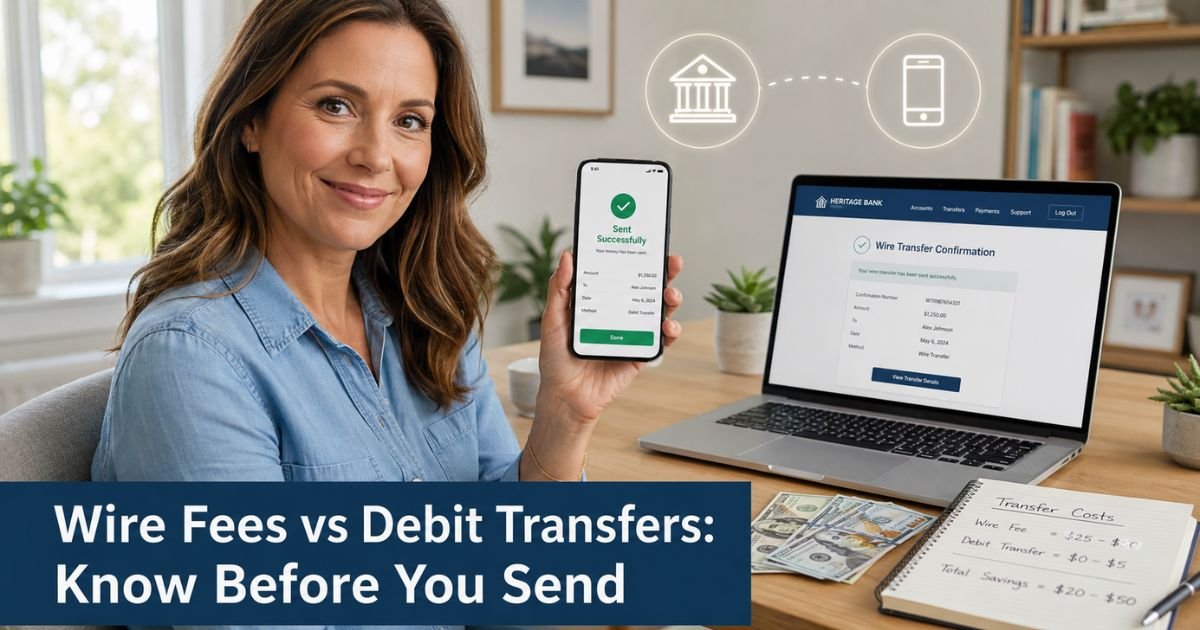
You need to send money fast. Maybe it is paying a contractor before a deadline, helping family, or closing on something important.
Your bank app shows a wire transfer option with a clear fee. At the same time, debit card transfers through phone apps look quick and often free at first glance.
The difference between a bank wire transfer fee and debit card transfer options can add up to real money depending on how much you send, where it goes, and how quickly you need it there.
We break down typical 2026 costs from major US banks and popular apps, plus speed, limits, and protections so you can pick the right method and keep more cash in your pocket.
Let us start with what a wire transfer actually is and why the fee exists.
What Is a Bank Wire Transfer?
A bank wire transfer moves money directly from one bank account to another through secure networks like the Federal Reserve system for domestic sends or SWIFT for international ones.
It is fast and final once processed, which makes it popular for large or time-sensitive payments such as real estate closings or business invoices.
Banks charge for wires because they guarantee quick settlement and handle the processing and risk. You can usually start one online, in the app, or at a branch.
Domestic wires often land the same business day if sent before the cutoff. International wires take longer and cost more.
Typical Bank Wire Transfer Fees in 2026
Fees vary by bank, whether you use online banking or visit a branch, and if the transfer is domestic or international. Most major banks charge more for branch or phone requests than for app or online initiation.
Here are current typical ranges:
- Outgoing domestic wire: $15 to $35 when done online or in the app. Branch requests often add $10.
- Incoming domestic wire: Usually $0 to $15, and many banks waive it.
- Outgoing international wire: $35 to $50 or higher, plus possible foreign exchange markups of 1% to 3%.
- Incoming international wire: $0 to $25 at the receiving bank.
Some online banks and credit unions offer domestic wires for $0 with qualifying accounts. Always check your specific bank before you send.
Average Fees Comparison for Common Money Transfer Methods in the US (2026)
| Transfer Method | Typical Domestic Fee | Speed | International? | Important Notes |
|---|---|---|---|---|
| Bank Wire (major banks) | $15 – $35 | Same business day | Yes | High limits; final and irreversible |
| Zelle (bank-linked) | Usually $0 | Minutes | No (US only) | Daily/weekly limits vary by bank |
| Venmo (standard send) | $0 | 1–3 business days | Limited | Instant to debit card usually costs 1.75% |
| Cash App (standard send) | $0 | 1–3 business days | No | Instant to debit card often 0.5–2.5% |
| ACH External Transfer | Usually $0 | 1–3 business days | Limited | Free slow alternative to wires |
Debit Card Transfers Explained
When we talk about debit card transfers in this context, we mean using your linked debit card through digital apps or bank features to send money quickly. Popular examples include Zelle (often built into your bank app), Venmo, Cash App, and PayPal.
These options usually pull from your bank account or debit card balance. Standard sends are often free because they use the ACH network, which costs banks less to process than wires.
However, “instant” transfers straight to a debit card almost always add a percentage fee. Limits are generally lower than wires, and not every recipient or country is supported.
Real Costs of Debit Card and App Transfers
Most people use these methods for everyday or moderately sized domestic transfers. Here is what you can expect in 2026:
- Zelle: Free for both sender and recipient when both banks participate. Money often arrives in minutes. Daily limits range from a few thousand dollars up to much higher at some banks.
- Venmo and Cash App standard transfers: Free when funded by bank account or debit card. Instant cash-out to a linked debit card typically costs 1% to 1.75% (with minimums and maximums).
- PayPal: Similar structure, free standard sends from balance or bank, with fees for instant options or credit card funding.
These apps feel convenient because everything happens on your phone. Just remember that “free” usually applies only to standard timing. Instant convenience costs extra.
A Real-World Example
Take a 38-year-old marketing consultant. She needs to pay a freelance designer $2,800 by the end of the day to keep a client project on schedule. The designer banks with a major institution that supports Zelle.
She could send a domestic wire for about $25–$30 and know the money will arrive the same day with high certainty. Instead she opens her bank app, uses Zelle, and sends the full $2,800 with zero fees in under two minutes.
The designer confirms receipt almost immediately. She saved the wire fee and still met the deadline because both parties used a compatible bank app.
If the amount had been much larger or the designer needed funds in another country, a wire might have made more sense despite the cost.
Wire Transfer Fees vs Debit Card Transfers: Which Should You Choose?
The best choice depends on three main factors: how fast you need the money to arrive, the size of the transfer, and where it is going.
Use a wire transfer when:
- You need guaranteed same-day or next-day delivery for a large amount.
- The recipient expects direct bank-to-bank settlement (common in real estate or business deals).
- You are sending internationally and want wide acceptance.
Choose debit card or app transfers when:
- The amount fits within daily limits and both parties use compatible US banks or apps.
- You want to avoid fees for standard domestic sends.
- Convenience on your phone matters more than instant final settlement.
Pro Tip: Always start wires or external transfers inside your bank’s mobile app or online banking instead of calling or visiting a branch. Many banks charge noticeably less for digital requests, sometimes saving you $10 or more per transfer.
How to Minimize Fees on Your Next Transfer
Here are practical steps that help most people save money:
- Compare your bank’s online or app fee versus branch fee before you start.
- Ask about fee waivers if you have a premium checking account or maintain higher balances.
- Use Zelle or standard ACH transfers for everyday domestic sends under your bank’s limits.
- For larger or international amounts, get quotes from your bank and at least one low-cost service like Wise before deciding.
- Double-check recipient details. Wires are almost impossible to reverse if you send to the wrong account.
Common Mistake: Assuming every instant transfer to a debit card is free. Standard sends through apps are often free, but the convenient instant option to your linked debit card or bank account usually adds a percentage fee that grows with the amount sent. Always review the final fee screen before confirming.
FAQs About Wire Transfer Fees vs Debit Card Transfers
How much does a typical domestic bank wire transfer cost at major US banks in 2026?
Most big banks charge between $15 and $35 for an outgoing domestic wire when you initiate it online or in the app. Fees often rise to $35–$45 if you request it at a branch or over the phone. Some online banks and credit unions offer domestic wires for free with qualifying accounts. Incoming domestic wires are usually $0 to $15.
Are there fees when I send money using my debit card through apps like Zelle, Venmo, or Cash App?
Zelle transfers between participating US banks are normally free. Venmo and Cash App standard sends funded by your bank account or debit card are also free. However, instant transfers from these apps straight to a linked debit card usually cost 1% to 1.75% of the amount (with minimum and maximum fees). Always check the fee before you confirm.
When should I pay for a wire transfer instead of using a free debit card option?
Pay the wire fee when you need same-day guaranteed delivery for a large amount, when the recipient requires direct bank settlement, or when sending internationally where app limits and availability fall short. For most everyday domestic person-to-person or small business payments under a few thousand dollars, free options like Zelle or standard app transfers save you money and still arrive quickly.
Conclusion
Bank wire transfer fees give you speed and finality that debit card app options often cannot match, but they cost more for domestic sends and much more internationally.
Debit card transfers through Zelle, Venmo, and similar apps keep most everyday domestic transfers free or very low cost when you accept standard timing.
Next time you need to move money, open both your bank app and your favorite transfer app, compare the final numbers and arrival times side by side, and choose what fits the amount, deadline, and destination.
A few minutes of checking can easily save you $25 or more on a single transfer.
Disclaimer: This content is for informational and educational purposes only and does not constitute professional, financial, legal, or medical advice. The information provided may not apply to your specific situation. Always consult a qualified professional for personalized guidance.