What Is an ACH Charge on a Debit Card?

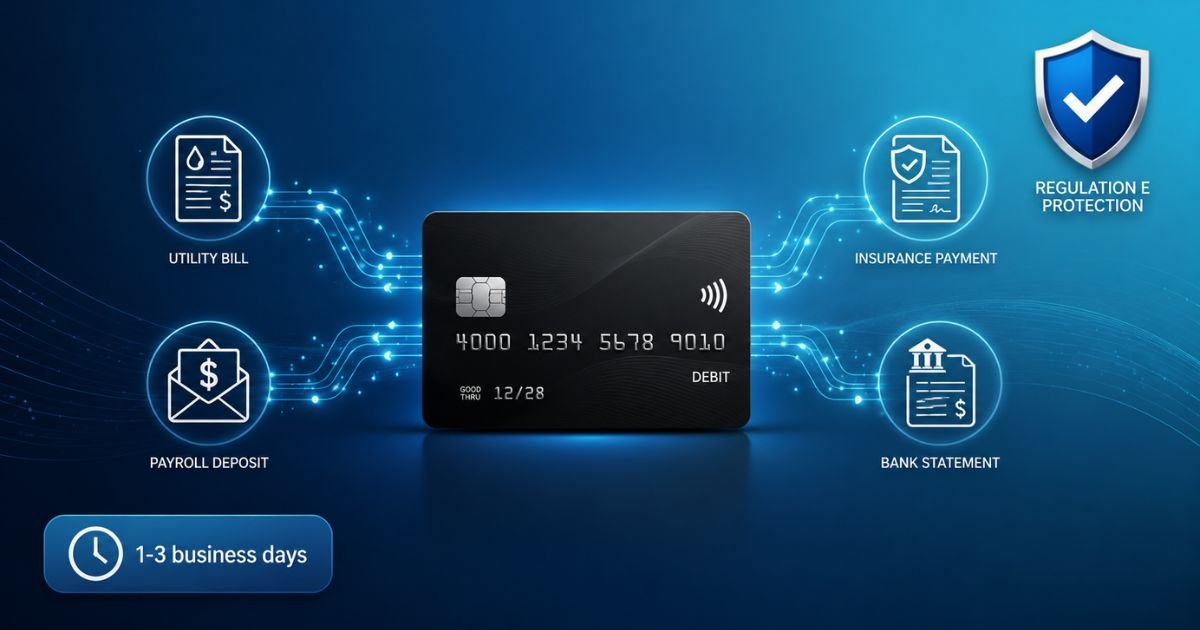
An ACH charge on a debit card is an electronic funds transfer processed through the Automated Clearing House (ACH) network that withdraws money directly from the checking or savings account linked to your debit card. These transactions appear on your bank or debit card statement or mobile app as “ACH DEBIT,” “ACH WITHDRAWAL,” or a company name followed by ACH codes.
🔑 Key Takeaways
- An ACH charge is a bank-to-bank electronic transfer (not a card-network swipe) that debits the account tied to your debit card.
- Most ACH charges come from authorized recurring payments such as utilities, insurance, loans, and subscriptions.
- Standard ACH processing takes 1–3 business days because transactions are batched overnight rather than authorized in real time.
- You have strong protections under Regulation E (enforced by the CFPB) for unauthorized or erroneous ACH transfers.
- Reviewing your full account activity regularly and setting up alerts helps you catch problems early and avoid overdraft fees.
What Is an ACH Charge on a Debit Card?
An ACH charge on debit card simply means money was moved electronically from your checking or savings account using the Automated Clearing House network. The ACH network is the main U.S. system for moving money between banks and credit unions without paper checks or card networks.
Your debit card itself is not “swiped” or processed through Visa, Mastercard, or similar networks during an ACH transaction. Instead, the payee (utility company, employer, lender, etc.) uses your bank routing number and account number to pull or push funds. Because your debit card is linked to that same account, the transaction shows up in your debit card app, online banking, or monthly statement alongside your everyday purchases.
Understanding this distinction protects you from confusion and helps you exercise the correct consumer rights when something looks wrong.
How ACH Transactions Work on Your Bank Account
The ACH network operates in batches. Throughout the day, banks collect payment instructions and send them to ACH operators (the Federal Reserve or The Clearing House). These batches are processed overnight and settled the next business day or later.
There are two main types you will see:
- ACH Debit — Funds are pulled from your account (most common for bill payments).
- ACH Credit — Funds are pushed into your account (direct deposit of payroll, tax refunds, or government benefits).
Both types appear on the same account ledger that feeds your debit card view. No real-time authorization like a card purchase occurs; the transaction relies on the authorization you previously gave the payee.
Common Sources of ACH Charges on Debit Card Statements
You will most often see ACH charges for routine, recurring payments you authorized. Typical examples include:
- Utility bills (electric, gas, water, internet, phone)
- Insurance premiums (auto, home, health, life)
- Loan or mortgage payments
- Subscription services (streaming, gym memberships, software, meal kits)
- Rent or HOA fees (when the landlord uses ACH)
- Credit card bill pay set up through your bank
- Payroll direct deposits (these appear as ACH CREDITS)
- Government benefits or tax refunds
Businesses prefer ACH because fees are very low (usually $0.20–$1.50 per transaction) compared with card processing fees of 1–3%. That is why so many companies now offer “pay by bank account” or “autopay via ACH.”
ACH vs. Regular Debit Card Purchases: Key Differences
| Feature | ACH Charge | Debit Card Purchase |
|---|---|---|
| Network | Automated Clearing House (ACH) | Visa, Mastercard, or other card networks |
| Authorization | Routing + account number (pre-authorized) | Card number + PIN or signature |
| Speed of authorization | No real-time hold; batched | Instant authorization & hold |
| Typical settlement | 1–3 business days | 1–2 business days |
| Cost to merchant | Very low ($0.20–$1.50) | 1–3% + interchange fees |
| Reversibility | Can be returned or disputed under Reg E | Chargeback process available |
| Best for | Recurring bills, direct deposit | In-store and online purchases |
This table shows why an ACH charge feels different from a normal debit card swipe even though both ultimately reduce your available balance.
Why ACH Charges Take 1–3 Business Days to Post
Unlike a debit card purchase that receives instant authorization, ACH transactions move through a batch-processing system. Banks and ACH operators clear files overnight. Even with modern Same Day ACH options (available since 2016 and now widely used), full settlement and funds availability can still take one to three business days depending on when the file was submitted, bank cut-off times, and verification steps.
The extra time gives the system built-in safeguards against fraud and insufficient funds. Most ACH debits settle the next business day, but the full clearing window of up to three days is normal and expected.
How to Identify the Merchant Behind an ACH Charge
When you see an unfamiliar ACH entry, follow these steps:
- Log into online or mobile banking and click the transaction for full details.
- Look for fields labeled “Company Name,” “Originator,” “Company ID,” “Entry Description,” or “Trace Number” (a 15-digit tracking ID).
- Search the company name or ID online together with “ACH.”
- Call your bank’s customer service and ask them to provide the full originator information or trace number.
- Contact the company listed and request a copy of the authorization you signed.
Banks are required to help you identify the source. Never ignore an unknown charge—early identification prevents larger problems.
Your Rights and How to Dispute an ACH Charge
Regulation E (12 CFR Part 1005), enforced by the Consumer Financial Protection Bureau (CFPB), gives you strong protections for electronic fund transfers, including all ACH transactions.
Key rights include:
- Limited liability for unauthorized transfers when you notify your bank promptly.
- The right to dispute errors (wrong amount, wrong date, unauthorized transfer).
- Provisional credit during investigation in most cases.
- The ability to revoke authorization for recurring ACH payments.
Step-by-Step Dispute Process
- Notify your bank immediately — Call or use secure messaging the same day you notice the problem.
- Follow up in writing within 10 business days (use certified mail or the bank’s online dispute form).
- Bank investigation — The bank has 10 business days (20 if your account is newer than 30 days) to investigate.
- Provisional credit — If the investigation takes longer, most banks must credit your account temporarily (minus up to $50 in limited cases).
- Final resolution — The bank must correct any error within one business day of its determination and report results to you within three business days.
- If unresolved — You can escalate to the CFPB at consumerfinance.gov/complaint or contact your state attorney general.
For recurring authorized payments you want to stop, send a written revocation of authorization to both the payee and your bank. Your bank must honor it.
FAQs About ACH Charges on Debit Cards
What does ACH mean on my bank or debit card statement?
ACH stands for Automated Clearing House. It indicates an electronic bank-to-bank transfer that moved money into or out of the account linked to your debit card. These entries are completely separate from card-network purchases.
Is an ACH charge the same as a regular debit card transaction?
No. A regular debit card transaction uses card networks for instant authorization at the point of sale. An ACH charge uses the ACH network, relies on your routing and account numbers, and processes more slowly in batches. Both reduce your balance, but the mechanics and timelines differ significantly.
How long does an ACH charge usually take to clear?
Most ACH transactions settle in one business day, but the full window is typically one to three business days. Same Day ACH can speed things up to a few hours when both parties support it, yet standard processing remains the norm for many recurring payments.
Can I dispute or get money back for an unauthorized ACH charge?
Yes. Under Regulation E you have the right to dispute unauthorized ACH transfers. Notify your bank right away (ideally the same day). The bank must investigate, and you are generally protected from liability if you act within the required timeframes (two business days for certain access-device issues or 60 days from the statement date).
How do I stop future ACH payments to a company?
Revoke your authorization in writing to both the company and your bank. Your bank must stop processing future ACH debits from that originator once it receives your revocation. You can also place a stop-payment order on a specific scheduled payment, though banks may charge a fee for this service.
What information should I give my bank to trace an ACH charge?
Provide the date, amount, and any reference numbers shown on your statement. Ask specifically for the full originator name, Company ID, and 15-digit ACH trace number. Your bank can pull the complete transaction details and often identify the exact source quickly.
Does Regulation E cover ACH transactions on checking accounts?
Yes. Regulation E explicitly covers electronic fund transfers, which include ACH debits and credits. The same error-resolution procedures, liability limits, and investigation timelines that apply to debit card transactions also protect you for ACH activity on your linked accounts.
Conclusion
An ACH charge on a debit card is simply an electronic bank-to-bank transfer that appears in your account activity. These charges are normal for recurring bills and direct deposits, process more slowly than card purchases, and come with strong consumer protections under Regulation E.
The most important actions you can take today are:
- Review your recent account activity for any unfamiliar ACH entries.
- Set up transaction alerts in your banking app for amounts over a certain threshold.
- Keep a list of companies you have authorized for ACH autopay so you can quickly spot problems.
Understanding these transactions puts you in control of your finances and helps you avoid unnecessary fees or surprises. For more practical guides on debit card charges, banking rights, and protecting your money, explore the full library of resources at ChargeOnDebitCard.com.
Disclaimer: The information in this article is provided for educational and general informational purposes only. It does not constitute financial, legal, tax, or professional advice. Banking fees, ACH processing times, consumer protections under Regulation E, and bank policies can vary by financial institution and may change. Always verify the most current information directly with your bank or credit union and consult a qualified financial advisor or attorney for advice specific to your personal situation. ChargeOnDebitCard.com and its authors are not liable for any decisions or actions taken based on the content of this post.