How to Set Up Debit Card Transaction Alerts in 2026?

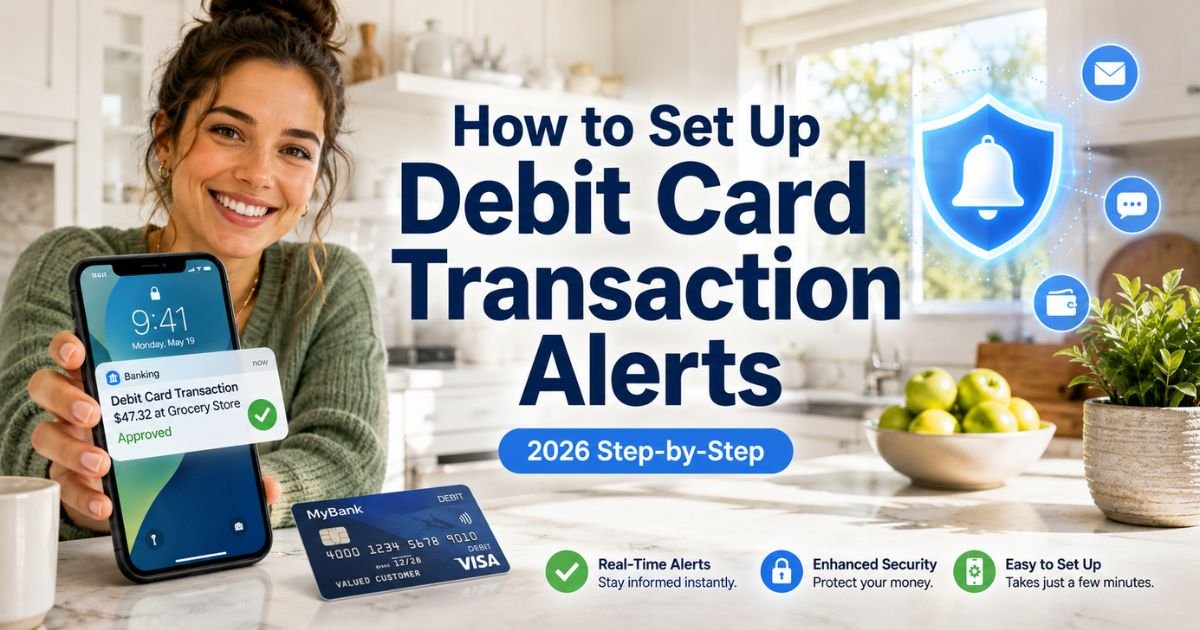
Imagine this. You check your bank app and notice a $89 charge at a store you’ve never visited. Your heart races for a second until you remember you set up debit card transaction alerts last month. One quick text from your bank and you caught it before any real damage happened.
That’s the power of real-time notifications. In today’s fast-moving world, debit card transaction alerts act like a personal security guard for your money. They tell you the moment someone swipes your card, whether it’s you grabbing coffee or a thief trying to test a stolen number.
You’ll walk away from this guide knowing exactly how to set up debit card transaction alerts on your phone or computer. We’ll cover the simple steps for the biggest US banks, plus smart tips to make them work for your lifestyle.
Why Debit Card Transaction Alerts Matter in 2026
Fraudsters move fast. According to recent reports, debit card fraud cases keep climbing even as banks improve their systems. A single alert can save you hours of hassle and hundreds of dollars.
Beyond security, these notifications help you track daily spending without opening your app every five minutes. You spot overspending early, catch subscription charges you forgot about, and feel confident your money stays where it belongs.
Most major banks now make setup ridiculously easy through their mobile apps. If you haven’t turned them on yet, you’re missing out on one of the simplest ways to protect your finances.
Benefits of Turning On Debit Card Transaction Alerts
Here’s what you actually gain when you set up these handy notifications:
- Instant fraud protection. Spot unauthorized charges within seconds instead of weeks.
- Better spending awareness. See every purchase as it happens so you stay on budget.
- Peace of mind while traveling. Get alerts even when you’re out of town or abroad.
- Quick dispute power. Report problems right away before they grow.
- Family account oversight. Monitor joint or kids’ debit cards without constant checking.
You’ll sleep better knowing your account is quietly watching your back 24/7.
How to Set Up Debit Card Transaction Alerts Step by Step
The good news? The process takes less than five minutes for almost every bank. Here’s the general roadmap that works across most apps:
- Download or open your bank’s official mobile app.
- Log in with your username and password.
- Tap your profile icon or go to “Settings.”
- Look for “Alerts,” “Notifications,” or “Account Alerts.”
- Select your debit card or checking account.
- Choose “Transaction Alerts” or “Purchase Notifications.”
- Pick your dollar threshold (even $1 works for total coverage).
- Decide how you want to receive them: push notification, text, or email.
- Save and test with a small purchase if possible.
That’s it. Now every swipe lights up your phone.
For Chase Customers
Open the Chase Mobile app and tap the profile icon in the top right. Choose “Profile & settings” then “Alerts.” Select “Manage alerts,” pick your debit card account, and turn on transaction or purchase alerts. You can choose text, email, or push notifications and set any amount minimum you like.
For Bank of America Users
Log into the Bank of America Mobile Banking app. Tap the Bank of America inbox icon, then select “Quick Setup” for essential alerts including debit card activity.
Or go deeper by choosing specific accounts and toggling on “Debit card payment” or “Unusual activity” alerts. Delivery options include app push, text, or email.
For Wells Fargo Account Holders
Sign on to Wells Fargo Online or the mobile app and head straight to “Manage Alerts.” Select your debit card from the account list.
Check the boxes for the alerts you want, such as every purchase or only those over a certain dollar amount. Choose email, text, or push notification delivery and you’re done.
For Capital One Cardholders
In the Capital One app, tap the “Profile” tab then “Alerts & Notifications.” Pick your debit card and enable “Instant Purchase Notification.”
Set your minimum dollar amount (zero dollars catches everything) and select push, text, or email. The app walks you through the rest in seconds.
Types of Debit Card Alerts You Can Customize
Not every alert needs to be the same. Most banks let you fine-tune exactly what you hear about.
| Alert Type | What It Does | Best For |
|---|---|---|
| Every Transaction | Notifies on every single purchase | Maximum security & tracking |
| Dollar Threshold | Only alerts above $50 (or whatever you set) | Reduces notification overload |
| Unusual Activity | Flags charges in new locations or big amounts | Fraud protection on the go |
| Declined Transactions | Tells you why a purchase was rejected | Troubleshooting fast |
| International Purchases | Notifies on any spend outside the US | Travelers and online shoppers |
Pick the combination that matches your lifestyle so your phone doesn’t buzz nonstop.
Pro Tip: Start with “every transaction” alerts for the first week. You’ll quickly see which types feel helpful versus annoying, then adjust the settings to match your real life.
Real-World Example
Take a 30-year-old graphic designer in Denver. He travels a lot for client meetings and often uses his debit card for coffee runs and software subscriptions. One day while in a coffee shop, his phone buzzed with a $1,200 charge at an electronics store in another state.
Because he had already set up debit card transaction alerts, he knew instantly it wasn’t him. He froze the card through the app and called his bank before the thief could spend more. The whole thing took under ten minutes, and his money stayed safe.
He now tells all his friends: “Those alerts turned a potential nightmare into a two-minute fix.”
Common Mistake: Setting up alerts but forgetting to update your phone number or email address after you switch carriers. If your contact info is outdated, those lifesaving notifications never reach you. Double-check your profile every six months.
Extra Tips to Make Alerts Work Even Better
Turn on two-factor authentication while you’re in the settings. Link your debit card to digital wallets like Apple Pay or Google Pay for extra layers of protection. And consider setting low-balance alerts so you never get surprised by an overdraft.
If you share a joint account, make sure both people get the notifications. That way everyone stays on the same page.
FAQs About How to Set Up Debit Card Transaction Alerts
How do I set up debit card transaction alerts if I don’t have the mobile app?
You can usually do it through your bank’s website by logging into online banking. Look for a “Profile & Settings” or “Alerts” section, then follow the same steps as the app. Most banks still let you choose text or email delivery even without the mobile app installed.
Will debit card transaction alerts drain my phone battery or cost extra money?
No. Push notifications use almost no battery, and banks don’t charge for alerts. Text messages might use your regular plan, but most people find the peace of mind worth it. You can always switch everything to free push notifications inside the app.
Can I set up debit card transaction alerts for a child’s or joint account?
Yes. Most banks let the primary account holder add alerts for authorized users or linked debit cards. Just log in as the main user, select the specific card, and turn on notifications. It’s a great way for parents to teach kids about money while keeping an eye on spending.
Conclusion
Setting up debit card transaction alerts is one of those small steps that delivers huge peace of mind. You protect yourself from fraud, keep better tabs on your spending, and gain confidence every time you swipe.
Whether you bank with Chase, Bank of America, Wells Fargo, or anywhere else, the process is quick and completely free. Take five minutes today to turn them on and you’ll wonder how you ever lived without them.
Your money works harder when you stay in the loop. Go ahead and open that banking app right now.
Disclaimer: This content is for informational and educational purposes only and does not constitute professional, financial, legal, or medical advice. The information provided may not apply to your specific situation. Always consult a qualified professional for personalized guidance.