
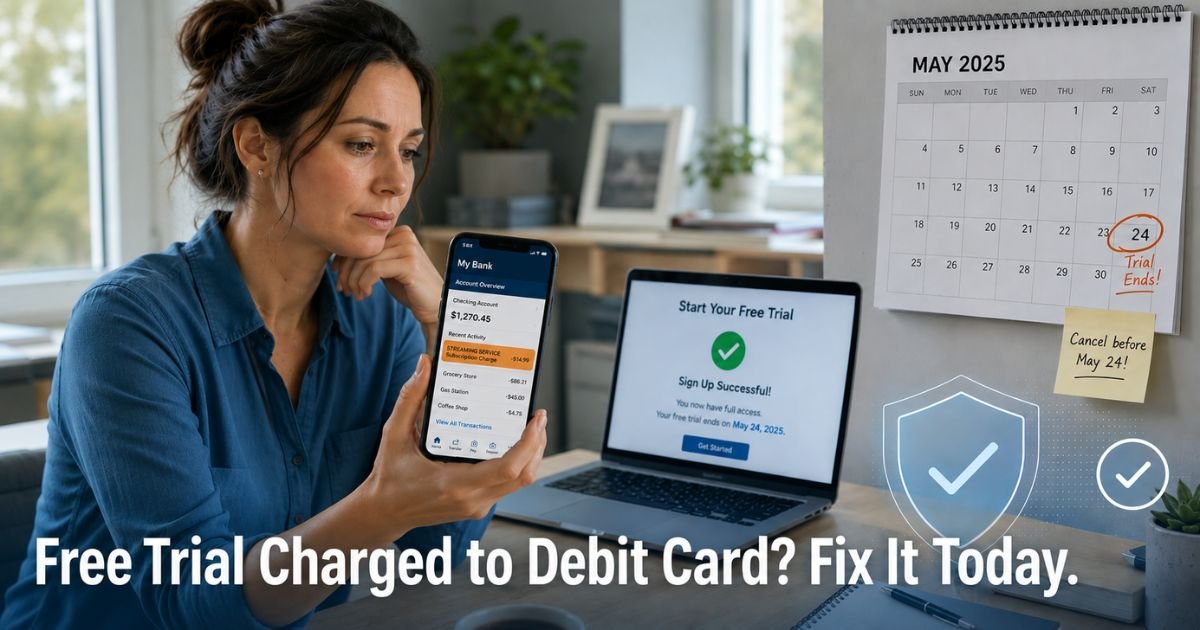
You signed up for a free trial on a new app or streaming service, planning to cancel before it ended, then life got busy. Days later a charge hits your debit card and the subscription is suddenly active.
If a free trial charged to debit card has left you frustrated and watching your balance drop, you are not alone and you have real options to fix it fast.
This guide gives you the exact steps to cancel the recurring billing, request your money back, and protect your account going forward.
Why Free Trials Turn Into Unexpected Debit Card Charges
Free trials work well for companies because they make signup incredibly easy. You enter your debit card once, enjoy the service, and the fine print often includes automatic conversion to paid unless you cancel. Many people miss the exact end date because reminders get lost in busy inboxes or they assume the trial stays free.
The result is a clean, recurring charge that feels like it came out of nowhere. Debit cards make the sting immediate since the money leaves your account right away, unlike credit cards where you can sometimes hold payment during a dispute.
Understanding this pattern helps you move from surprise to action without wasting time blaming yourself. The good news is most companies and banks expect these mix-ups and have processes to help when you respond quickly.
What to Do When a Free Trial Charged to Debit Card Shows Up on Your Statement
Your first and most important move is reaching the company directly. They control the subscription and often issue refunds more easily than you might expect, especially on the first charge.
Here is the simple process that works for most people:
- Pull up your original signup confirmation email or receipt and note the exact trial length and cancellation instructions.
- Go to the company website or app and look for an obvious cancel button or chat support option first.
- If you need to call, have your account details ready and calmly explain you signed up for the free trial only and want to cancel plus receive a full refund for the recent charge.
- Ask for written confirmation of the cancellation and refund timeline before you end the call or chat.
- Check your debit card statement the next business day and again in 3 to 5 days to confirm the reversal posted.
Take a freelance writer in Portland. She tried a popular project management tool for its 14-day free trial using her debit card. Work deadlines pushed the end date out of mind.
When the $15 charge appeared she called support the same afternoon, referenced her trial signup date, and requested cancellation plus refund. The representative processed both requests on the spot and emailed confirmation.
The money returned to her account four days later. She succeeded because she acted fast and kept her documentation ready.
If the Company Will Not Refund: Disputing the Charge with Your Bank
Sometimes support teams push back or claim the trial terms were clear. In those cases your bank becomes your strongest ally.
Debit card disputes fall under federal rules that protect you from billing errors and unauthorized recurring charges in many situations.
Call your bank’s customer service line and clearly explain the situation: you authorized a free trial, the company converted it to paid without clear ongoing consent, and the merchant refused a reasonable refund request.
Provide the dates, your communication attempts, and any screenshots. Ask specifically how they handle free trial conversion disputes.
Most major banks will open a claim, place a provisional credit while they investigate, and often side with you on the first occurrence when documentation shows a trial period. The process usually takes 7 to 10 business days for simple cases.
Pro Tip: Before you enter your debit card for any free trial, take a quick screenshot of the pricing page and the exact cancellation instructions. Having that visual proof ready makes every later conversation faster and more successful.
Your Step-by-Step Action Plan
Keep this simple checklist nearby the next time you notice an unexpected subscription charge. It turns a stressful situation into a clear sequence of moves.
Your Go-To Checklist for Fixing a Free Trial Charge on Debit Card
| Step | What to Do | Why It Matters | Typical Timeframe |
|---|---|---|---|
| 1 | Contact the company by chat or phone | Stops future billing and often secures refund | Same day |
| 2 | Save all emails, screenshots, and notes | Creates strong evidence for bank dispute | Immediately |
| 3 | Call your bank and open a dispute if needed | Triggers investigation and possible provisional credit | 1-2 days after noticing charge |
| 4 | Follow up on the reversal status | Confirms money returned to your account | 3-10 business days |
| 5 | Add subscription tracking to your routine | Prevents the same problem with other services | Ongoing |
How to Prevent Future Free Trial to Paid Surprises on Your Debit Card
The easiest way to avoid this headache is building small habits before you ever sign up. Set a phone calendar reminder for two days before any trial ends. Use that reminder to cancel or decide if the service is worth paying for.
Consider using a virtual card number from services like Privacy.com or your bank’s virtual card feature for trials only. These numbers can be set to expire after one use or limited to a certain amount, so even if you forget, no large recurring charge can process.
Review your monthly statements the same day they arrive. Catching a charge early gives you maximum time to resolve it before the next billing cycle hits. These habits take just a few minutes but save hours of frustration later.
Common Mistake: Many people wait too long or decide a $10 or $20 charge is not worth the hassle. Small recurring amounts add up fast, and banks frequently reverse the initial charge as a courtesy when you report it promptly with good records. Delaying only makes the money harder to recover.
FAQs About Free Trial Debit Card Charges
Can I still get a refund if I missed the free trial cancellation window?
Yes, many companies issue a one-time goodwill refund when you contact them quickly and explain you intended to cancel. If they refuse, your bank can often reverse the charge after reviewing the trial terms and your prompt attempts to fix the issue.
How long do I have to dispute a charge from a free trial on my debit card?
You generally have up to 60 days from the statement date under federal rules, but acting within the first few days dramatically improves your chances of quick resolution and provisional credit. The sooner you report it, the better.
Will disputing a free trial charge hurt my credit score or banking relationship?
No. Legitimate billing disputes on debit cards do not affect your credit score. Banks expect occasional disputes and usually view them as normal account maintenance, especially when you provide clear documentation about a trial period.
Conclusion
Taking these steps protects your money and gives you control over subscriptions instead of the other way around.
Start today by checking your recent debit card transactions and reaching out to the company behind any surprise charge. You will likely see results faster than you expect and feel more confident about future signups.
Disclaimer: This content is for informational and educational purposes only and does not constitute professional, financial, legal, or medical advice. The information provided may not apply to your specific situation. Always consult a qualified professional for personalized guidance.